

The UK's Renewable Energy Skills Gap: Where Are the Biggest Talent Shortages?
In June 2025, RenewableUK and the Offshore Wind Industry Council reported that the UK wind workforce had grown to more than 55,000 people, with nearly 40,000 of those in offshore wind alone. Impressive growth. The problem is the next number: to hit the government's 2030 deployment scenarios, that offshore total needs to reach somewhere between 74,000 and 95,000. We have roughly five years to find tens of thousands of skilled people, in a market where every other clean-energy sector is fishing in the same pond.
We've spent our careers in this sector, so we'll be straight with you: the headline "skills gap" isn’t one gap. It's five or six distinct shortages, each with its own causes and its own pressure points. Lump them together and you'll hire badly.
Here's where the squeeze is tightest, and why.
Offshore wind: the shortage of specialists
Offshore wind is the UK's flagship, and the RenewableUK report is clear about where the pain sits. The roles flagged as hardest to fill are high-voltage cable specialists, wind turbine technicians, installation engineers, environmental advisers, planning officers and technical managers. These are roles that take years to develop.
The acute shortage is at the experienced, technical end. There is a reasonable flow of new entrants and apprentices, but a thin layer of people with the project delivery and high-voltage experience to lead them. That's why the report points to oil and gas workers and former military personnel as priority pools for retraining: they bring the safety culture and engineering depth the sector needs now.
Grid infrastructure: a quiet bottleneck holding everything back
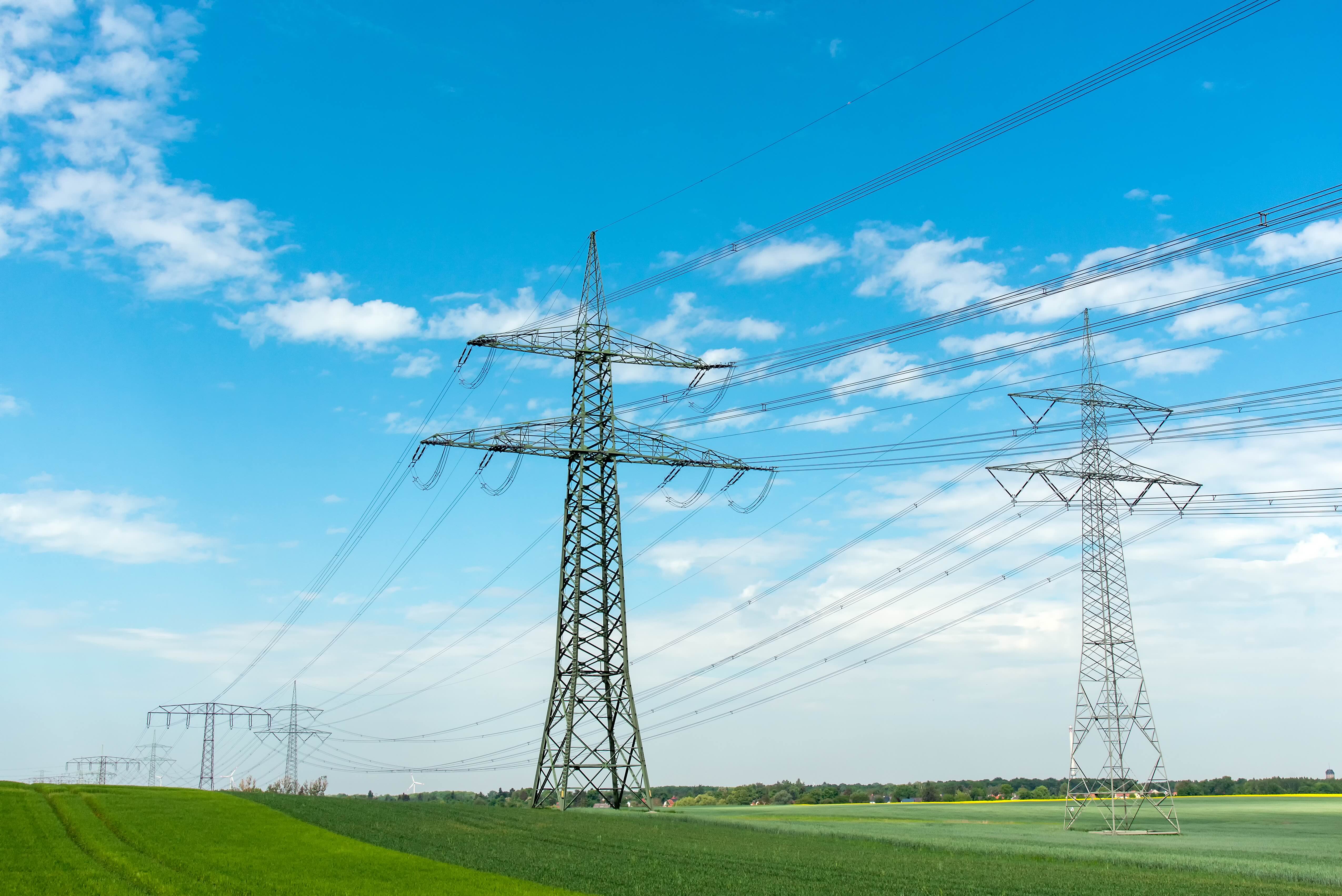
You can build all the turbines you like; without wires to carry the power, they're stranded. National Grid is investing over £30 billion in England and Wales in the five years to 2029 alone, and in its August 2025 report, "Building the skills for our energy future", it named the problem plainly: a "skills capacity crunch".
The shortages here are brutally specific: overhead lineworkers, cable jointers, HVDC engineers, protection and control engineers, commissioning engineers, substation fitters. Many require years to reach full competency, up to "Senior Authorised Person" level. The kicker is demographics: National Grid estimates one fifth of the UK energy workforce will retire by 2030 as the baby boomer generation reaches pension age, while engineering and manufacturing apprenticeships have fallen around 12% over five years. Demand is rising as the most experienced people walk out the door.
Battery storage: a brand-new market with no legacy workforce
Battery storage is scaling faster than almost anything else on the grid. Energy-Storage.News reported in January 2026 that the UK's grid-scale battery market grew 45% by operational capacity in 2025, adding 4GWh to reach 12.9GWh.
The recruitment problem is structural: there is no legacy battery workforce to draw on. The sector has only existed at utility scale for a handful of years. The hardest roles to fill are the hybrid ones, people who understand grid connections and power systems, or asset managers who can model dispatch strategy and trading revenues. These profiles don't exist in volume because the market that needs them is younger than most graduate schemes. Firms are redeploying people from power trading, transmission and conventional generation, but not fast enough.
Hydrogen: small today, but the experience gap is already real
Hydrogen is earlier in its journey, and the Energy Sector Cyber Security Strategy notes the UK still needs to "deliver first-of-a-kind clean dispatchable technologies, such as carbon capture and storage and hydrogen to power." That "first-of-a-kind" framing is the whole story for talent.
Because deployment is nascent, the shortage isn't yet about volume; it's about experience. The roles in shortest supply are mid-career and senior people who have actually delivered hydrogen production, storage and transmission at scale, and there are very few of them anywhere. Much of the transferable skill sits in oil, gas and chemicals, but pulling it across requires firms to compete on more than salary. Get your early hires wrong here and you'll feel it when projects move from concept to construction.
Cyber security: the shortage nobody budgeted for
This is the one too many renewables firms miss. Energy Sector Cyber Security Strategy, published jointly by DESNZ, Ofgem, the NCSC and NESO in May 2026, states it directly: "The UK faces a significant shortage of professionals that have the required combination of cyber and engineering skills, with an insufficient number of security-cleared industry staff."
Securing a wind farm or a battery site isn't standard IT security; it's operational technology, where a control system failure has physical consequences. The strategy explicitly prioritises "bridging the gap between OT engineering and cyber". Following a December 2025 cyber attack in Poland that targeted distributed renewable assets, this stopped being theoretical. National Grid now lists cyber professionals among its critical workforce shortages, alongside the lineworkers and engineers, evidence that cyber is now a core renewables hiring problem.
The UK's renewables skills gap is really five gaps, each needing a different hiring strategy. The common thread is experience: across offshore wind, grid, storage, hydrogen and cyber, the shortage bites hardest at the technical and mid-to-senior level, where people take years to build and can't be conjured from a job advert. Firms that plan their workforce as deliberately as they plan their projects will win the talent. Those that wait until a role is vacant will be hiring against the whole sector at once.
At Gaia, we work exclusively in renewables, and we know where these people are because we've spent our careers among them. If you're building or scaling a team across wind, grid, storage, hydrogen or energy cyber security, let's talk about getting ahead of the gap rather than chasing it.
Sources
Wind Industry Skills Intelligence Report 2025 — RenewableUK / Offshore Wind Industry Council — 17 June 2025 — https://www.renewableuk.com/news-and-resources/press-releases/55-000-people-now-work-in-the-uk-wind-industry-including-40-000-in-offshore-wind/
Verified quote: between 74,000 and 95,000 people will be needed to support the accelerated deployment of offshore wind by the end of the decade.
Building the skills for our energy future — National Grid — August 2025 — https://www.nationalgrid.com/document/562961/download
Verified quote: skills 'capacity crunch'; investing over £30 billion in England and Wales over the five years to 2029; one fifth of people working in the UK energy sector will retire by 2030.
Energy sector cyber security strategy — DESNZ, Ofgem, NCSC and NESO — 28 May 2026 — https://www.gov.uk/government/publications/energy-sector-cyber-security-strategy/energy-sector-cyber-security-strategy
Verified quote: The UK faces a significant shortage of professionals that have the required combination of cyber and engineering skills, with an insufficient number of security-cleared industry staff.
Another record-breaking year for UK battery storage as 4GWh comes online — Energy-Storage.News — 13 January 2026 — https://www.energy-storage.news/another-record-breaking-year-for-uk-battery-storage-as-4gwh-comes-online/
Verified quote: The UK grid-scale battery storage market grew 45% by operational capacity in 2025, with 4GWh coming online during the year, bringing total operational capacity to 12.9GWh.
More Assets






Clarity In The Search
What sectors do you recruit for?
What types of roles can you help us fill?
How quickly can you provide suitable candidates?
Do you recruit permanent, contract or temporary staff?
Can you support projects across the UK and internationally?
How do you assess candidate quality?
What makes your recruitment consultancy different?
Can you help with difficult-to-fill or niche positions?
Do you provide recruitment support for major project mobilisation?
How do we get started?

Ready to Scale Your Team?
Whether you’re looking for your next career move or a partner to help build your brand, let’s talk.